My Background
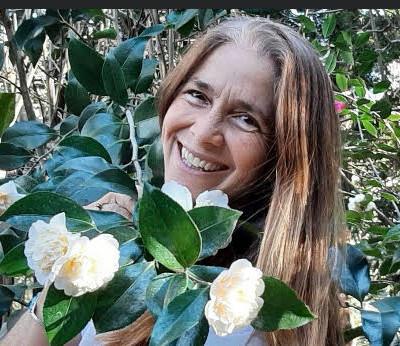
I began my teaching career as a young, idealistic public school 2nd grade teacher in the town of San Ysidro, near the California Mexico border. To this first job I brought my family-rooted values of diversity, kindness and curiosity, as well as a love of children. I put into practice the hands on approaches I learned from the UC San Diego Teacher Education Program. I then moved to the Big Island of Hawaii and taught 1st and 5th grade. It was in Hawaii that I discovered Waldorf Education.
I received my Waldorf training on Oahu and taught Kindergarten through 5th grade at the quaint Malamalama Waldorf School outside of Hilo. Being a Waldorf teacher is a lifelong journey. Whereas my previous education was broad and practical, Waldorf education was deep and inquisitive. I continue to blend these two experiences when I teach students.
In 2009 my family of four set off to Sonoma county, California – a mecca of Waldorf education. Through my experience as a teacher at Summerfield Waldorf School and Farm (grades 1-5) as well as Sebastopol Independent Charter School (grades 5-7 and 1-2), I gained experience and perspective.
After 16 years as a class teacher of various grades, I found my current passion for helping students who struggle to keep up academically with their peers. As a literacy specialist at Sebastopol Independent Charter School, I was able to work one on one or with small groups to target specific needs. Every class has children who demonstrate creative strengths yet move at their own, often slower pace. My training with Orton Gillingham has been invaluable in addressing the different learning styles of these students. I have gained an understanding of how dyslexia and other disabilities alter a child’s experience with learning. Disabilities are biological in nature, but can be worked with and overcome to a degree with proven techniques. This includes building confidence and resilience.
My Approach to Working with Academic (and often emotional) Challenges
About 15-20% of children demonstrate symptoms of dyslexia so it is more common than we think. How can we use current brain research to understand how a dyslexic child reads? How can we apply this knowledge to teaching? How helpful is it to receive individual or small group support?
The buzzterm “Science of Reading” has come into the mainstream, yet there are still many questions about what it means and how it can help students who have difficulty in reading and writing. Over the last decade or more, data has shown that using a structured literacy approach brings effective and successful instruction. This approach is:
- prescriptive and diagnostic (with regular assessment to determine what is needed),
- sequential (follows a proven sequence for acquiring language),
- multisensory (engages the mind as well as speaking, writing and doing to ensure each part of the brain is engaged)
- structured (follows a pattern in each lesson, and over time)
- emotionally sound (encouragment and setting the child up for success is built in)
It has been shown that with this approach, new neural pathways in the brain are created. It may take time, but in my experience, every child can learn to read and write successfully. It may take one on one instruction to address each student’s unique style of learning or processing. Working within a small group of 2-3 has social benefits and can also be effective.
Just as important as phonics, decoding and encoding (spelling) is the development of background knowledge. This is key to comprehension and questioning, which are the ultimate goals of reading. I like to use maps, the globe, pictures and movement to illustrate details of a story and new vocabulary words. Perhaps most important is to relate a story to the child’s life. “Have you ever done that before, or felt that way before?” Any student but especially struggling ones need to connect to a text to understand it. Bringing in as many senses as possible also lights up areas of the brain for learning. When my student reads about crabs, I have them walk like a crab. When we are spelling the word “crab” we do it in the air, in sand and on paper. Multisensory learning gives the child a better chance of remembering, something that can be difficult for this population.
I mentioned emotional challenges because it is often hard on a child when they realize they can’t read like their peers. Encouragement goes a long way to build resiliency in a young child, especially when it is authentic and connected to success. We must set them up for success by offering lots of review as well as new. Talking about strengths is also important; dyslexic people are often creative thinkers who enjoy making things. Some may be good at seeing the big picture and noticing others. We need diversity in our world!